
Roof Rebedding MELBBOURNE/VIC
Roof rebedding is an important service for tiled roofs that are beginning to show signs of movement around ridge caps or deterioration in the bedding mortar. Bedding is the mortar base that helps secure ridge caps in place. Over time, this material can weaken, crack or become unstable due to age, weather exposure and natural roof movement. When that happens, the roof can become more vulnerable to shifting materials, leaks and ongoing deterioration.
At Club Roofing, we provide roof rebedding services for homeowners who want to maintain the condition and reliability of their tiled roof. Rebedding is often needed when ridge caps become loose, uneven or no longer appear firmly supported. Because ridge caps sit along key sections of the roof, keeping them stable is a very important part of long-term roof care.
Many people confuse rebedding with repointing, but they are not the same. Rebedding deals with the base layer under the ridge caps, while repointing is the outer finishing layer that seals and protects those areas. In some situations, a roof may need both services. A proper assessment helps determine whether the issue is only with the outer pointing or whether the bedding underneath also needs repair.
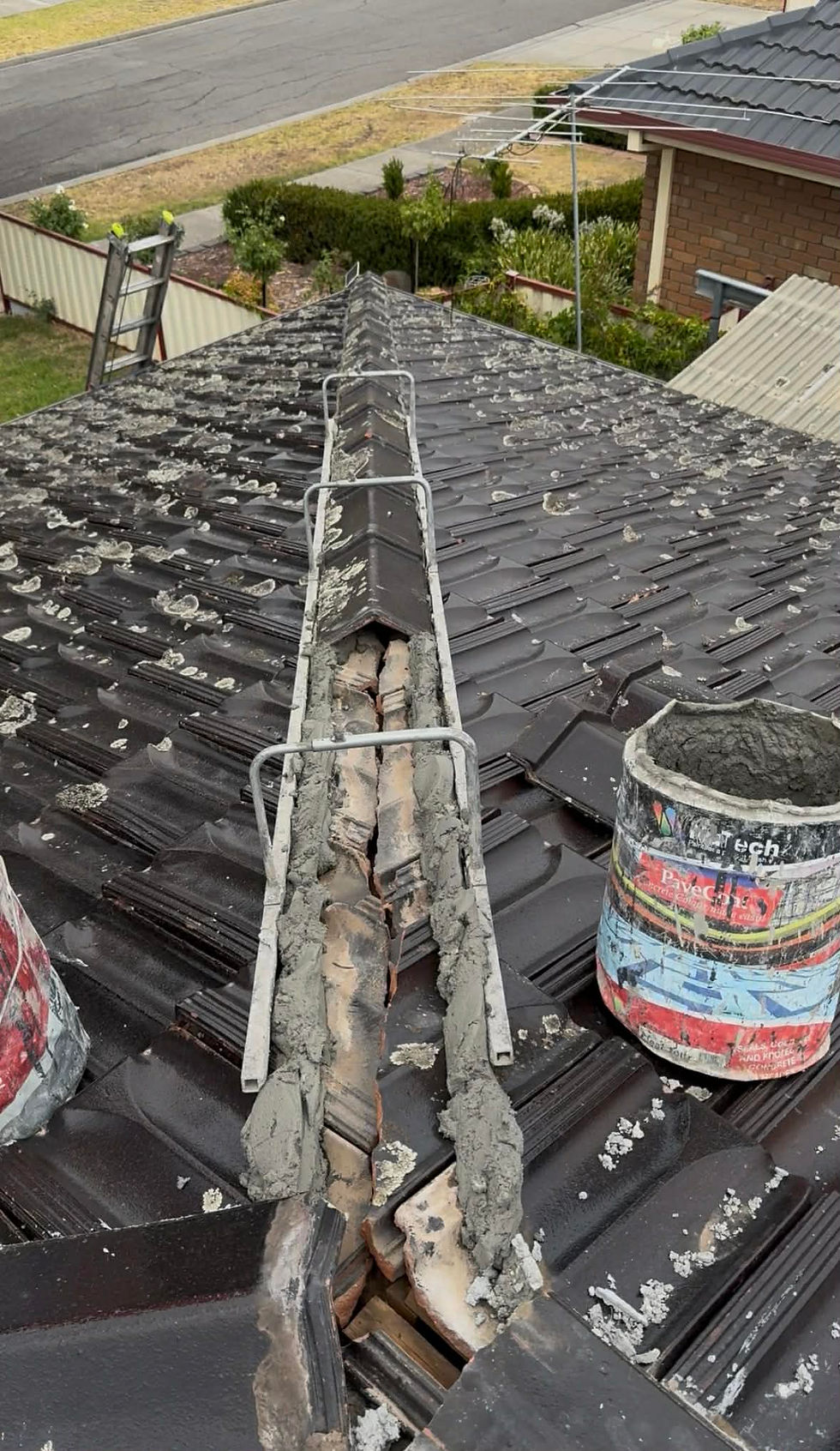
Common signs that rebedding may be required include visible ridge cap movement, breaking mortar, uneven roof lines or sections of the roof that look unstable. Acting early can help prevent these issues from developing into larger and more costly roofing problems.
Rebedding helps restore support where it matters most and can extend the life of the roof by improving structural reliability. It is a practical maintenance step for tiled roofs, particularly older ones that have experienced years of exposure to harsh weather and ageing materials.
If your roof is showing signs of loose ridge caps or deteriorating bedding, Club Roofing can help with professional rebedding services that improve roof stability and support long-term performance.
FAQ'S